
About Us
Learn about Our Mission and Projects
Kansas City Monuments Coalition
In 2025, the Mellon Foundation granted $4 million for the creation of the Kansas City Monuments Coalition (KCMC). KCMC helps fund 16 preservation and commemorative organizations across Kansas City so visitors can enjoy historic sites for years to come.
Locations include University of Missouri-Kansas City, the city of Kansas City itself plus classic points-of-interest local residents will recognize from childhood field trips such as Fort Osage National Historic Site, Missouri Town and the Wornall-Majors House Museums. Others are relatively unknown exhibits that can host the field trips of tomorrow.
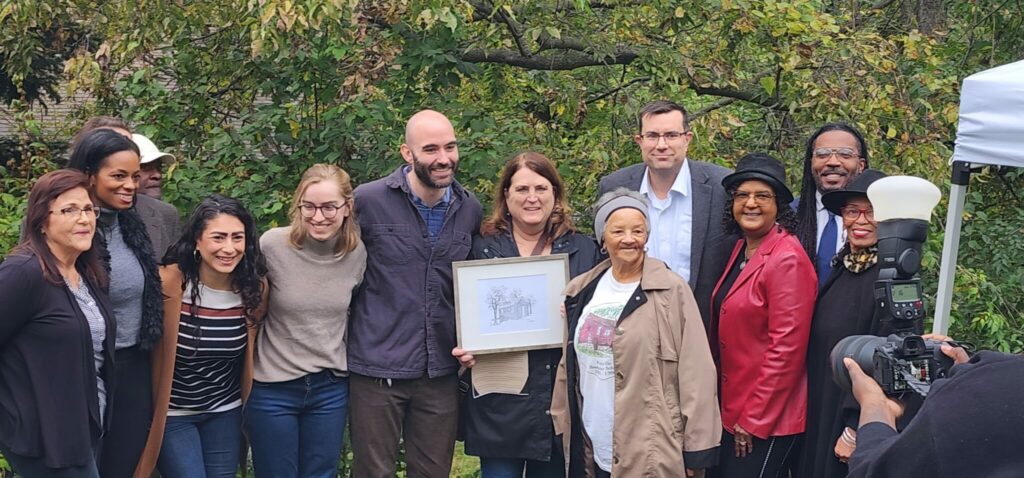
The grant was awarded as part of the Mellon Foundation’s Monuments Projects thanks to the work of UMKC’s Diane Mutti Burke, Ph.D., Sandra Enríquez, Ph.D. and David Trowbridge, Ph.D. from the history department, as well as Michael Sprague, coordinator for the Center for Digital and Public Humanities.
Most of the $4 million will directly fund the historical efforts of partner organizations, workshops, and a speaker series meant to facilitate a community of public historians. The projects must be completed within the three years allotted by the Mellon Foundation. A UMKC team, including additional faculty and staff, will also organize and deliver public programs as well as collaborate with the Kansas City Public Library’s Digital Branch on its next KC history website project. The grant includes funding for two full-time staff positions– Kevin McPartland, Ph.D. and Maggie Neel, Ph.D.– and graduate students who will aid this effort. Students who are part of the Mellon humanities internship program awarded to UMKC are also eligible to work on this project.
The Team




The Mellon Foundation
Monuments Project
“The Monuments Project is an unprecedented multi-year commitment by the Mellon Foundation that is aimed at transforming the nation’s commemorative landscape to ensure our collective histories are more completely and accurately represented.”
“The Monuments Project supports efforts to express, elevate and preserve the stories of those who have often been denied historical recognition, and explores how we might foster a more complete telling of who we are as a nation.”