
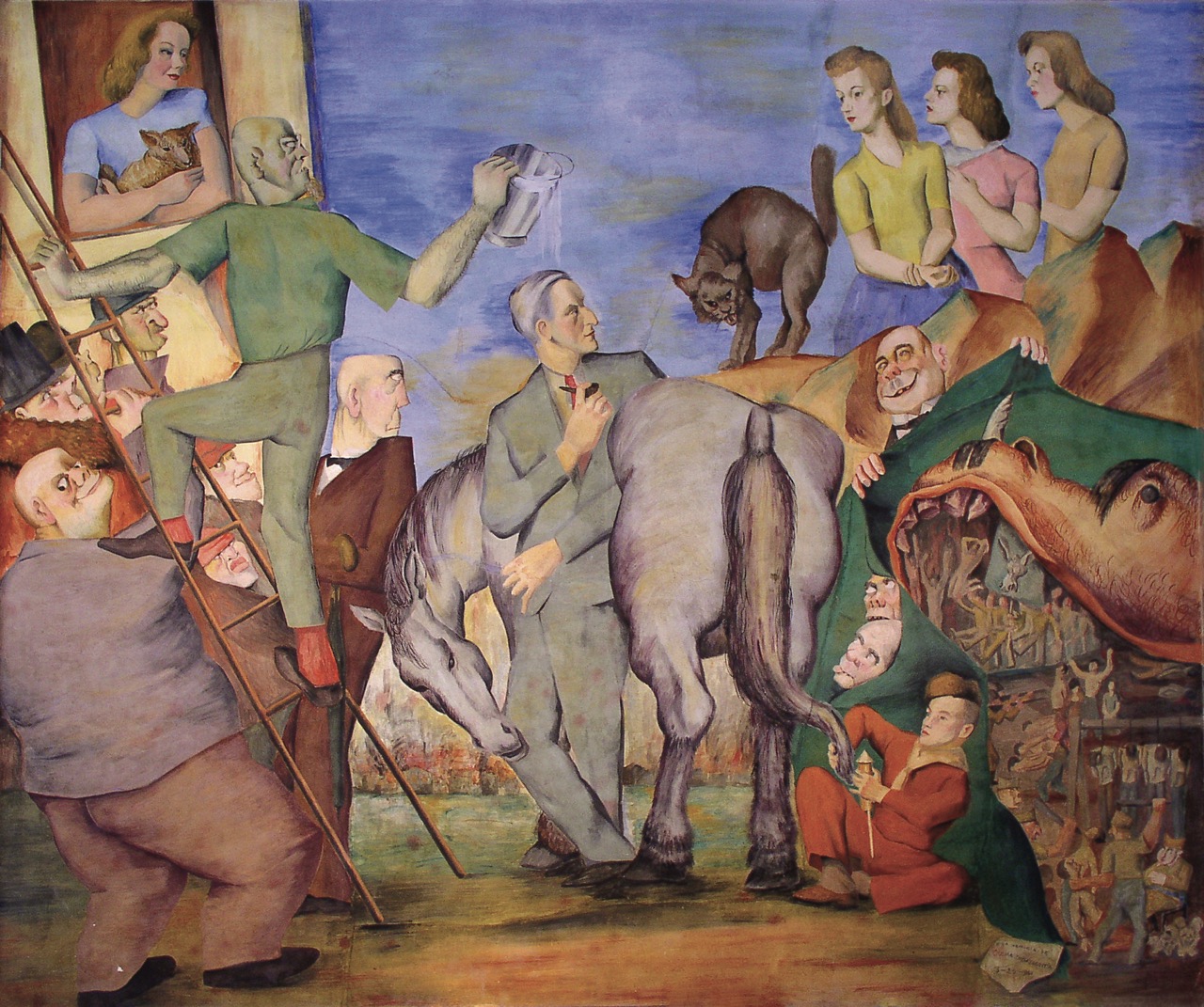
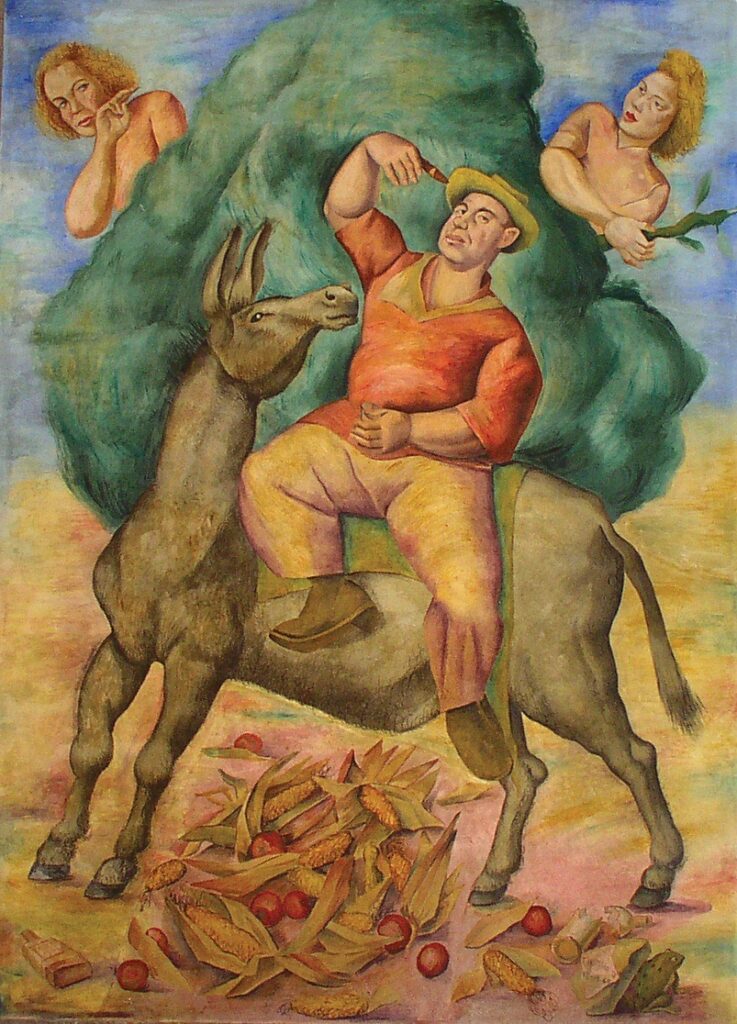
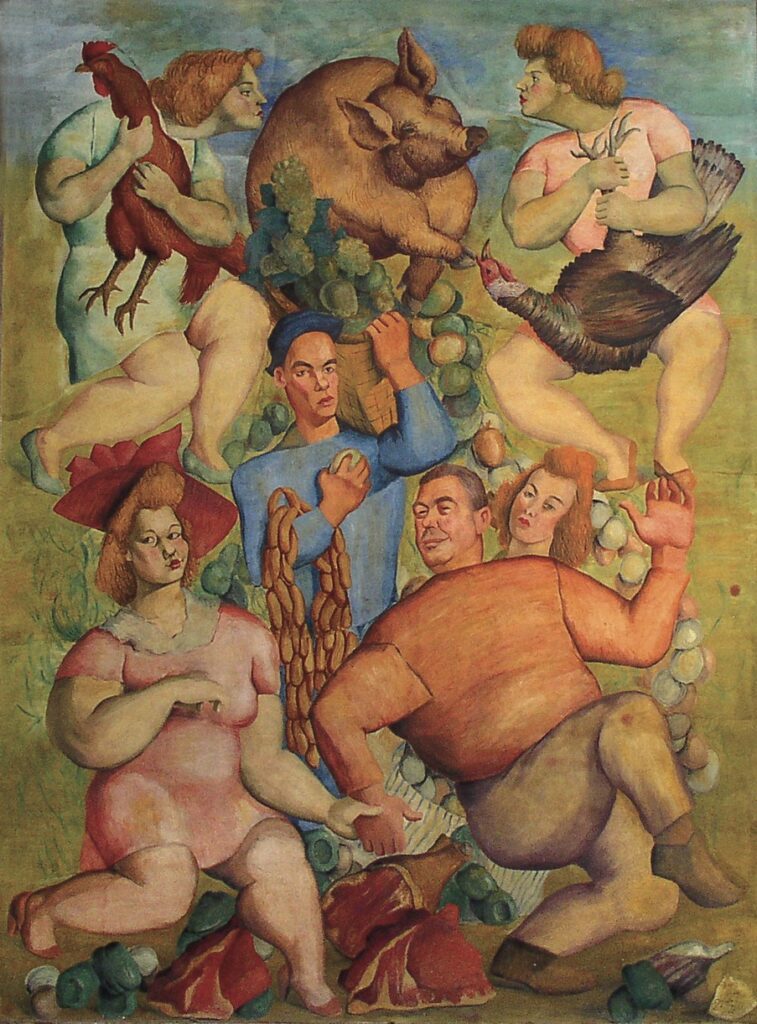
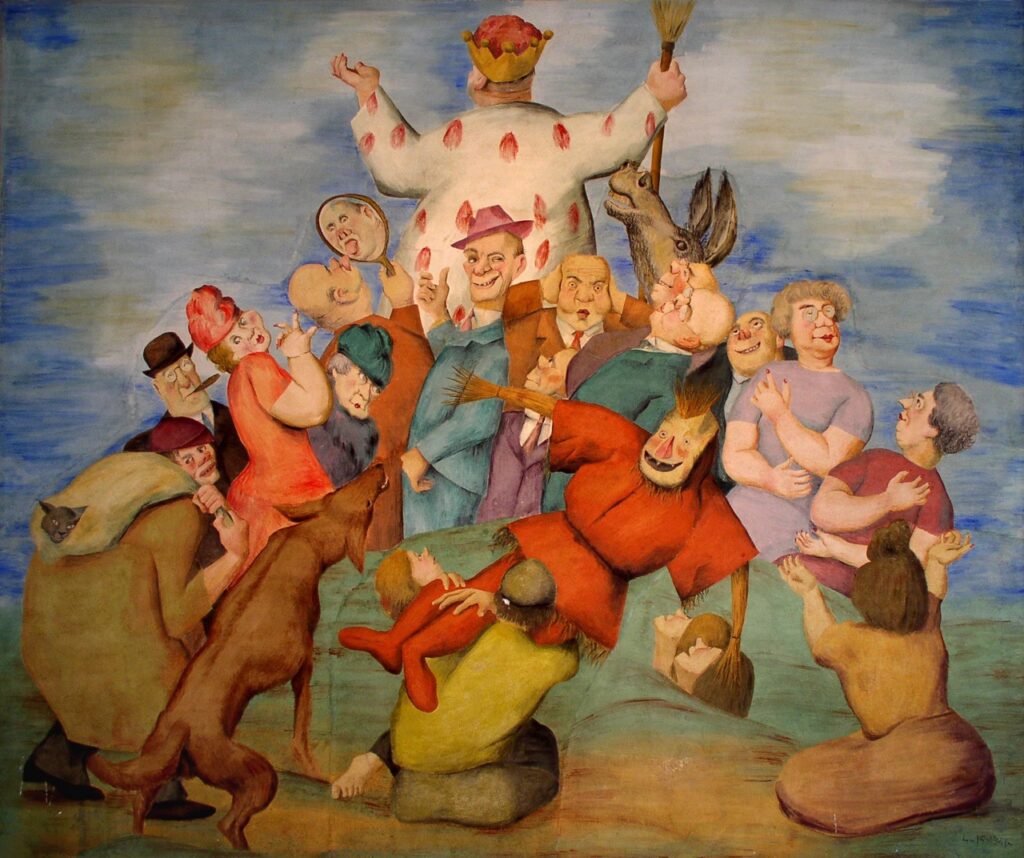
Between 1940 and 1941, renowned Spanish artist Luis Quintanilla painted the Don Quixote murals in what is now UMKC’s Haag Hall. As a supporter of the Republican cause during the Spanish Civil War, Quintanilla was forced to live most of his adult life in exile in the United States and France. In the early 1940s, the exiled Quintanilla became an artist-in-residence at the University of Kansas City (now UMKC) and painted the murals on the second-floor atrium walls of the Liberal Arts Building (now Haag Hall). These unique murals are one of only two extant mural series painted by Luis Quintanilla that survived the destruction of art under Franco’s dictatorship.
In the summer of 2025, with the support of KCMC, the Luis Quintanilla Murals Project brought Spanish fresco restoration specialists, Iñaki Gárate Llombart and Beatriz del Ordi, to UMKC to complete the first full restoration of the frescoes. The restoration process was intense, starting with extensive photography and in-depth notes, which were sent to Spain for the last member of the team, Guadalupe Carramiñana, for the required documentation. The specialists then cleaned the murals, using distilled water and Japanese paper. Finally, they filled and painted damaged areas in line with rigorous restoration guidelines.
The Luis Quintanilla Murals Project aims to restore the Don Quixote frescos in Haag Hall at the University of Missouri-Kansas City, while minimizing the future deterioration of the mural. The team continues to conduct research on the mural and plans to develop educational and interpretive materials that explore the significance of the frescoes. The rest of the Kansas City Monuments Coalition funding will go to streamlining the current ADA access to the murals and a touchscreen kiosk of historical information, interviews, and stories, which were previously inaccessible to curious passersby.
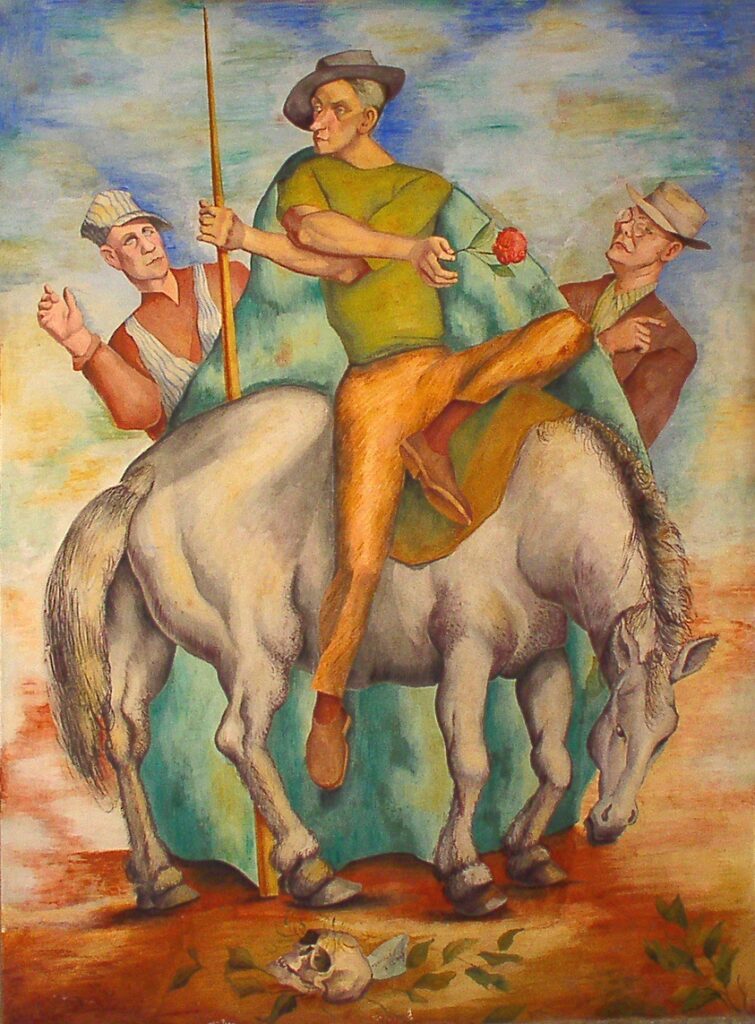
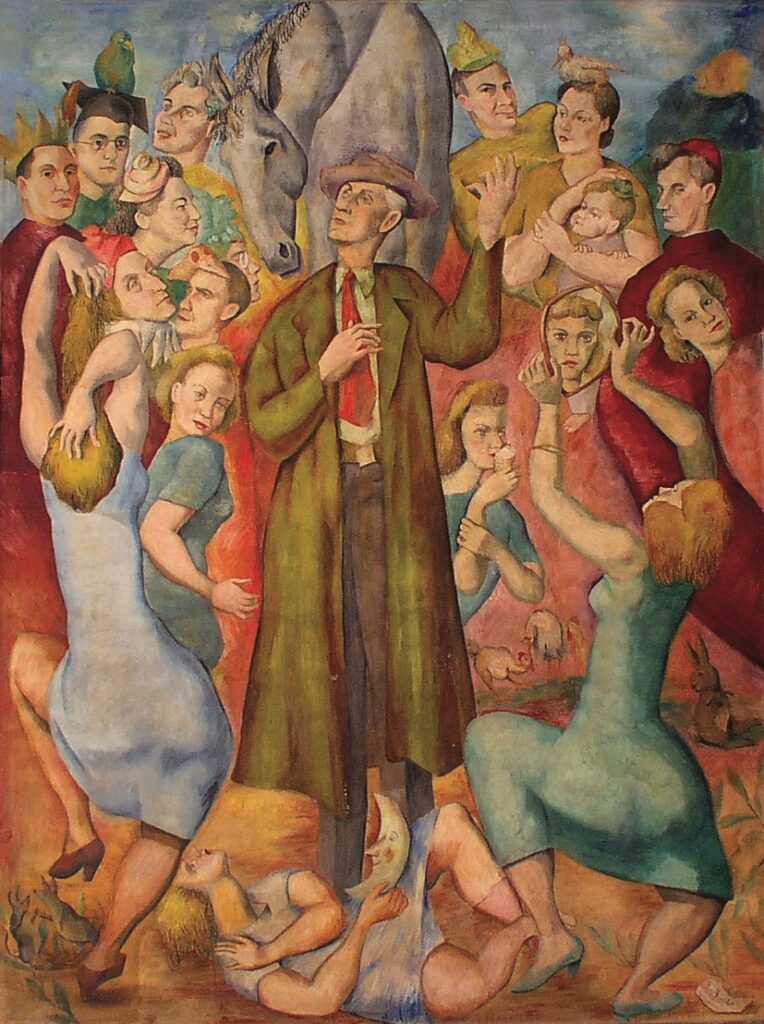
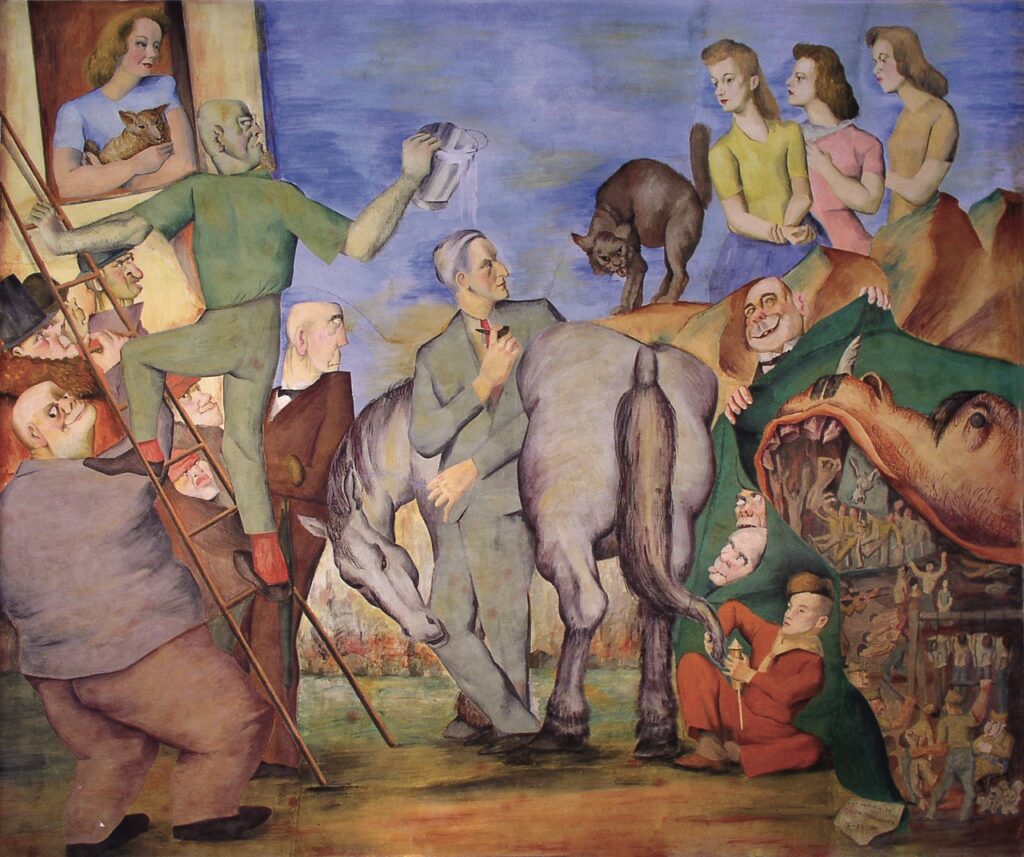
Mural photos by Brandon Parigo, UMKC MCOM. Quintanilla murals property of the Curators of the UM System.